
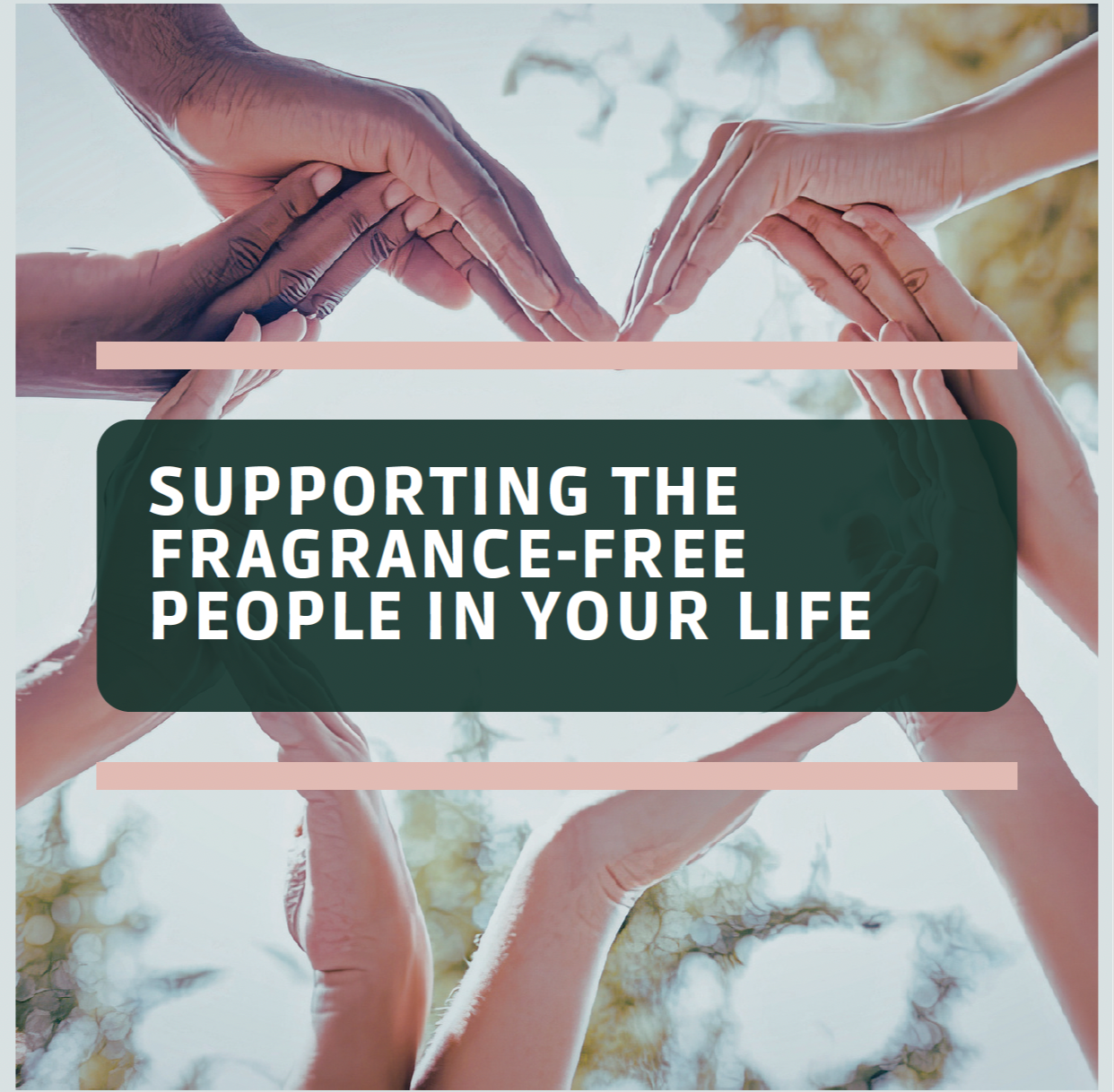
The official cover of the guide, showing hands reaching toward each other to form a heart shape above the title “Supporting the Fragrance-Free People in Your Life” in Hunter Green and Copper on a light, softly blurred background.
A friend is coming to stay. They ask if you could skip perfume that day, and mention they usually bring their own soap. You want them to feel welcome. You also realize you’re not quite sure what else might help.
I made a free guide for that moment.
Supporting the Fragrance-Free People in Your Life is a practical resource for the friends, family, partners, coworkers, and loved ones of people who live fragrance-free. It’s not a medical document. It’s a place to start, with useful context and small steps that can make everyday situations easier to navigate together.
Why We Made This Guide
Many people want to be supportive. They just haven’t been given a clear starting point. Fragrance is part of products, routines, and shared spaces, so it can be hard to know which changes matter or what to ask.
Fragrance sensitivity is also more common than many people realize. In a U.S. study, 30.5% of adults reported that scented products worn by other people were irritating. That’s a self-reported finding, not a measure of diagnosed fragrance allergy, but it helps explain why this comes up in so many homes, workplaces, and relationships. The study is available through PubMed.
For someone who lives fragrance-free, the work can reach beyond choosing personal care products. It may mean researching ingredients, planning how to leave a gathering, missing an event, or explaining the same need again. That mental load is easy to overlook if it isn’t part of your own routine.
I wanted to make a guide that helps supporters understand that bigger picture without asking anyone to become an expert overnight.
What’s Inside
The guide starts with Fragrance Sensitivity 101: what fragrance sensitivity can mean, common reactions people report, and the difference between “fragrance-free,” “unscented,” and “naturally scented.” Those labels can be confusing. For example, a product described as unscented may still use ingredients to mask its smell. “Naturally scented” can still mean fragrance has been added, such as essential oils.
The point isn’t to turn every visit into a label-reading exercise. It’s to give you some shared language and a better sense of why a product that seems mild to you may not work for someone else.
From there, Why This Matters looks at the invisible mental load. The guide describes the planning that can happen before a simple visit or event: checking what products are used, weighing whether a space will be manageable, and deciding whether it’s easier to skip it. Understanding that effort can shift the conversation from “Why can’t they just come?” to “What would help make this easier?”
Next, What Fragrance-Free Actually Means in Daily Life brings the topic into familiar settings. Home, work, and social plans all involve shared air and shared products. The aim is not perfection. It’s noticing where a small adjustment could make a real difference.
Practical ways to help at home and together
The How to Help section offers ideas for before a home visit. You might air out a room, unplug diffusers and wax warmers, skip scented candles, and wash guest linens with fragrance-free detergent. Scent travels between rooms, and plug-ins, diffusers, and sprays can linger in fabrics and other materials even when they’re no longer running. Sometimes airing out a space won’t be enough. Ask the person what would help, and make a plan together.
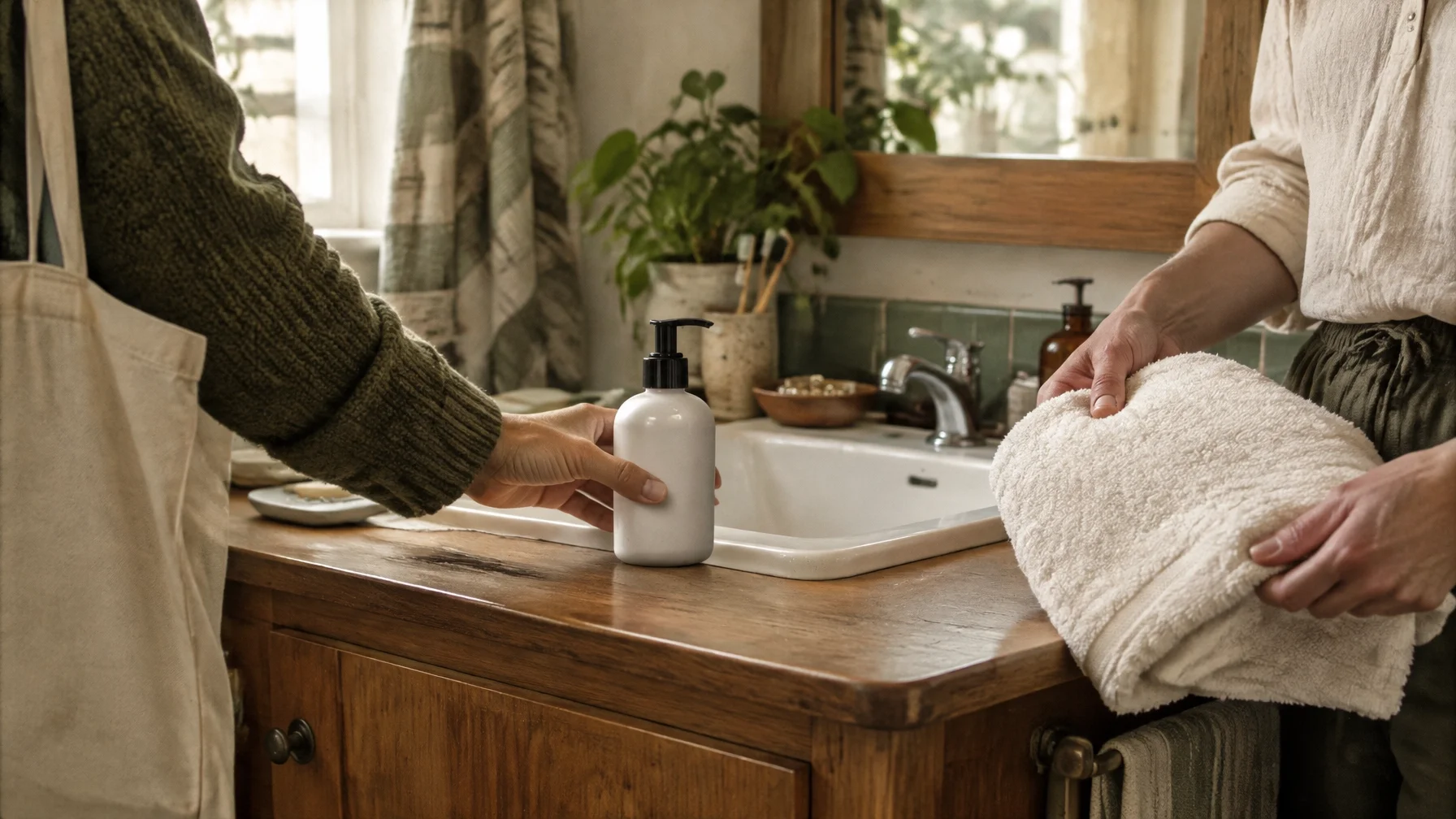
Two people at a bathroom sink. One is holding a towel and the other is holding a bottle.
AI-generated illustrative image.
The guide also covers kitchen and bathroom swaps. A fragrance-free hand soap at the sink can be one of the simplest, most useful changes. Fragrance-free dish soap can help, too. If you’ve recently cleaned, airing out the room before a visit may be welcome.
For social settings, the suggestions are just as practical: skip perfume and scented body products on days you’ll be together, use fragrance-free laundry products for the clothes you’ll wear around them, and choose outdoor or well-ventilated venues when that suits everyone. Flexibility matters. Plans may need to change, and that’s not a personal rejection.
At work, the guide makes a helpful distinction: a request about fragrance is about access to a shared space, not a personal criticism. Fragrance can build up in close or poorly ventilated areas. Managers should take accommodation requests seriously and consider whether fragrance-aware practices could help.
There’s also a Helpful & Harmful Language section. “I didn’t think it smelled that strong” can close down a conversation, even when it’s meant as reassurance. The guide suggests trying: “Thank you for telling me. What would be most helpful?” If you make a mistake, acknowledge it, ask what would help, and adjust. No long defense required.
Gift & Product Choices offers a useful steer away from scented candles, perfume, bath sets, essential oil blends, and “unscented” products that haven’t been checked. Consider fragrance-free personal care from a transparent brand, a gift card to a brand the person already trusts, or a non-product gift. Thoughtful doesn’t have to mean scented.
Finally, What Good Looks Like brings the focus back to consistency. A supportive relationship isn’t measured by one grand gesture. It can look like someone arriving without having to calculate every possible trigger, or not needing to repeat the same request each time.
Who Is This For?
This guide is for anyone with a friend, family member, partner, coworker, or loved one who lives fragrance-free. Their choice may be connected to a medical need, a diagnosed condition, or a personal value. The guide is written for supporters, not as a medical resource for diagnosis or treatment.
It’s also for people who have already been trying. You may have made changes and still be unsure what matters most. That’s okay. The useful next step is often a conversation: “What tends to make a visit easier for you?” Then listen to the answer, because needs differ from person to person.

Two people talking at desk.
AI-generated illustrative image.
Why We’re Sharing It Publicly
Kynd Alchemy is here to make fragrance-free personal care products, but our work doesn’t stop at our own bottles. Education can help make homes, workplaces, and shared spaces more considerate, too.
We’re sharing this guide as a free public resource because practical information shouldn’t be reserved for customers. There’s no purchase necessary. You can request it through our guide page. The guide is sent by email.
We want this conversation to be collaborative. This isn’t about shaming people who wear fragrance or expecting anyone to get everything right on the first try. It’s about taking someone’s needs seriously and finding workable ways to show up for them.
The fragrance-sensitive people in your life aren’t asking for perfection. They’re asking you to try, listen, and keep adjusting.
Download the free guide, and share it with someone who could use a place to start.
With kindness,
Ana