
The Invisible Cloud: Navigating a World That Refuses to Stop Spraying
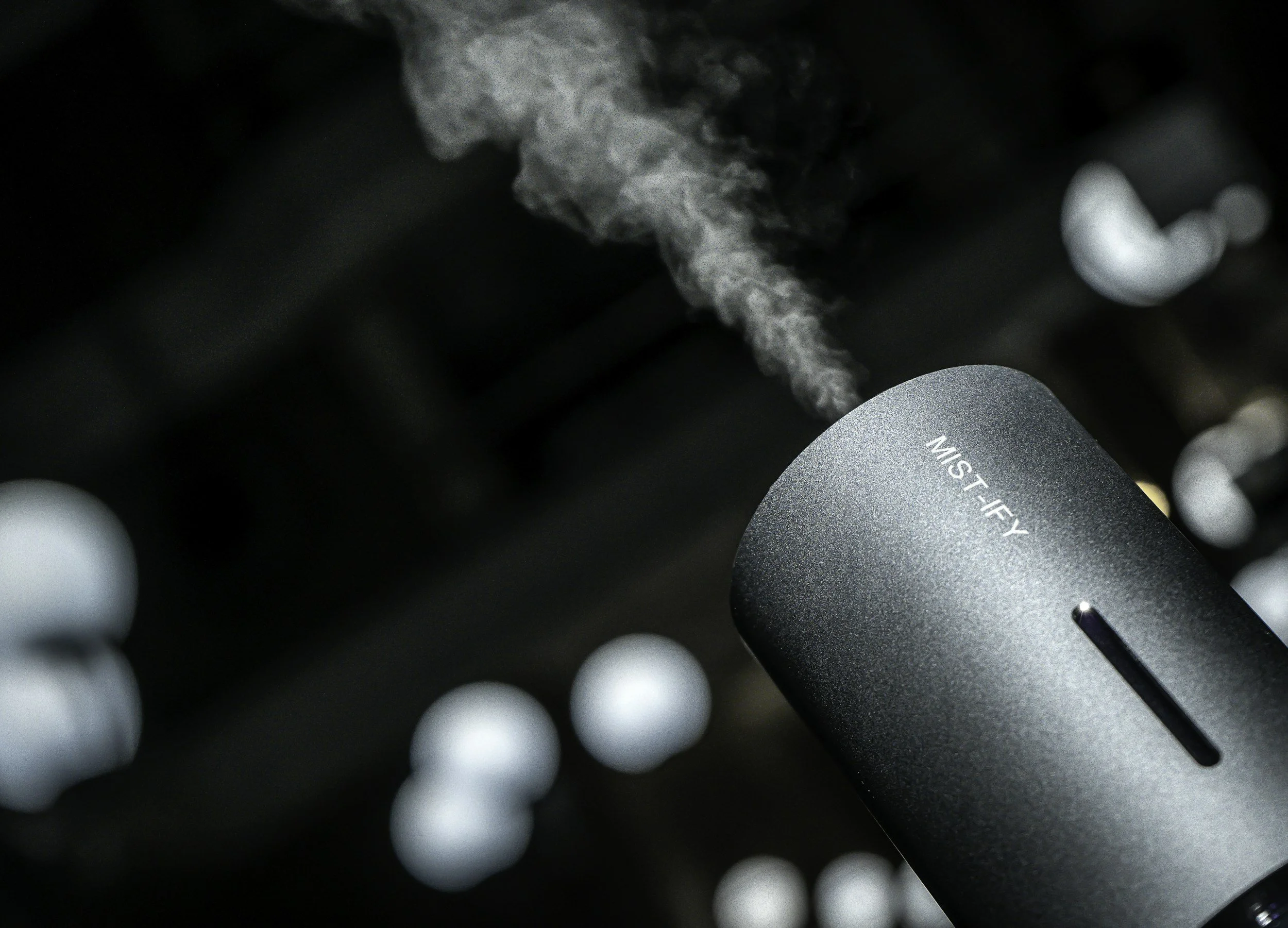
I stepped into an elevator last Tuesday and immediately stopped breathing. It was a reflex. My brain recognized the heavy, cloying scent of a designer "beast mode" cologne before my lungs could even process the air. The person wearing it had stepped off floors ago, but their presence remained. It was a thick, invisible wall of synthetic musks and heavy florals that stayed trapped in that small metal box. For the next three minutes, I had to decide between shallow breaths that made me lightheaded or deep breaths that would likely lead to respiratory discomfort.
This is the reality for those of us with fragrance sensitivities. We are living through what experts call a perfume boom. Fragrance is no longer just something you dab on your wrists for a gala. It is everywhere. It is in the "fresh linen" scent of the grocery store aisle. It is in the "signature scent" pumped into hotel lobbies. It is in the hair products of the person sitting next to you at the movies.
Lately, it feels like the world has decided to turn the volume up on scent, and those of us who need quiet are being squeezed out of public spaces.
The Squeeze Is Real
When people talk about invisible clouds, they often drift into conspiracy theories or complex weather patterns. I am talking about something much more practical. I am talking about the cloud of chemicals that follows a person down a hallway. I am talking about the way a single scented candle in a boutique can make the space inaccessible to a customer within minutes.
The fragrance industry is worth billions, and the current trend is toward "projection" and "sillage." These are fancy words that describe how far a scent travels and how long it lingers in a room after you leave. In the world of high-end perfumery, more is currently considered better. But for someone whose skin reacts to fragrance free skincare alternatives that aren't actually clean, or someone whose respiratory system treats synthetic molecules like an intruder, this trend is exhausting.
It is not dramatic to say that public spaces are becoming less accessible. I have had friends tell me they stopped going to their favorite coffee shops because the cleaning products were changed to a heavy citrus scent. I have heard from others who can no longer go to a friend’s house or go into their local shops because the pervasive use of scent machines in certain spaces makes them physically ill.
The Problem with "Unscented"
This is where the confusion usually starts. Most people think they are doing the right thing by reaching for a bottle that says "unscented." I see this all the time when I talk to people about why I started Kynd Alchemy.
There is a massive difference between unscented and fragrance-free. Unscented products often contain masking fragrances. These are chemicals added specifically to hide the natural, sometimes unpleasant smell of the raw ingredients. You might not smell a "scent," but your body is still processing those masking chemicals.
Truly fragrance free products, like the ones we formulate, contain no added fragrance or masking agents. What you smell is simply the ingredients themselves. This distinction is vital for anyone trying to heal a compromised skin barrier or manage a sensitivity. If you want to understand the deeper science behind this, our fragrance-free education page breaks it down without the marketing fluff.
The Laundry Loophole and the Office
The "Invisible Cloud" is not just about perfume. One of the biggest culprits is laundry detergent. We have been conditioned to believe that "clean" has a smell. If your clothes do not smell like a "Spring Meadow," are they even clean?
The reality is that laundry scents are designed to stick to fibers. They are engineered to survive the wash, the dry cycle, and days of wear. When you sit in an office for eight hours, you are breathing in the laundry chemicals of every person in the room. This is what I call the Laundry Loophole. People might skip the perfume for a "scent-free" office policy, but they rarely think about their fabric softener.
This creates a constant, low-level exposure that keeps our systems on high alert. It makes it nearly impossible for our skin to actually rest and recover. I often tell people that the first step to better skin health isn't a new cream: it is switching to a fragrance-free detergent. It is about removing the irritants that are constantly rubbing against your skin or irritating your airways.
Radical Transparency as an Antidote
When I started Kynd Alchemy, I did not want to just create another product line. I wanted to create a baseline of safety. I wanted to make things that did not require a PhD to decode.
In a world that refuses to stop spraying, the most radical thing we can do is be completely open about what is in the bottle. We do not hide behind the word "fragrance" on an ingredient list. We list everything. If an ingredient is in there, it is there for a reason: usually to hydrate, protect, or stabilize. It is not there to smell like a cupcake or a sandalwood forest.
This approach is about giving people back a sense of agency. When you know exactly what you are putting on your body, you can navigate your day with a little less fear. You can stop wondering if your hand soap is the reason your knuckles are cracked and red. If you are curious about my own journey with this, you can read about why I started with a hand soap to see how deep these frustrations go.
Reclaiming the Space
So, how do we live in a world that feels like a giant air freshener?
First, we have to stop apologizing for our needs. Having a sensitivity to fragrance is not a "preference." It is a biological response. When we ask for fragrance-free spaces, we are asking for accessibility.
Second, we can lead by example. We can choose high-quality fragrance free products that prove you do not need a synthetic scent to have a luxurious experience. Fragrance-free does not have to mean clinical or boring. It can mean intentional. It can mean that you value the health of your skin and the comfort of those around you more than a fleeting trend.
I hope that as more people realize the impact of the "Invisible Cloud," we will start to see a shift. I am seeing it already in certain communities where "scent-aware" policies are becoming the norm. It starts with small choices: the soap in your guest bathroom, the detergent you use for your towels, the products you use before you head to work.
We might not be able to control every elevator we step into, but we can control what we bring into the room with us. We can choose to be kind to ourselves and to the air we share.
If you are ready to join the conversation or want to help us push for more accessible public spaces, take a look at our advocacy work. We are trying to build a world where everyone can breathe a little easier.
It is not dramatic. It is just relentless. And it is something we can change together, one bottle at a time.
With kindness,
Ana